
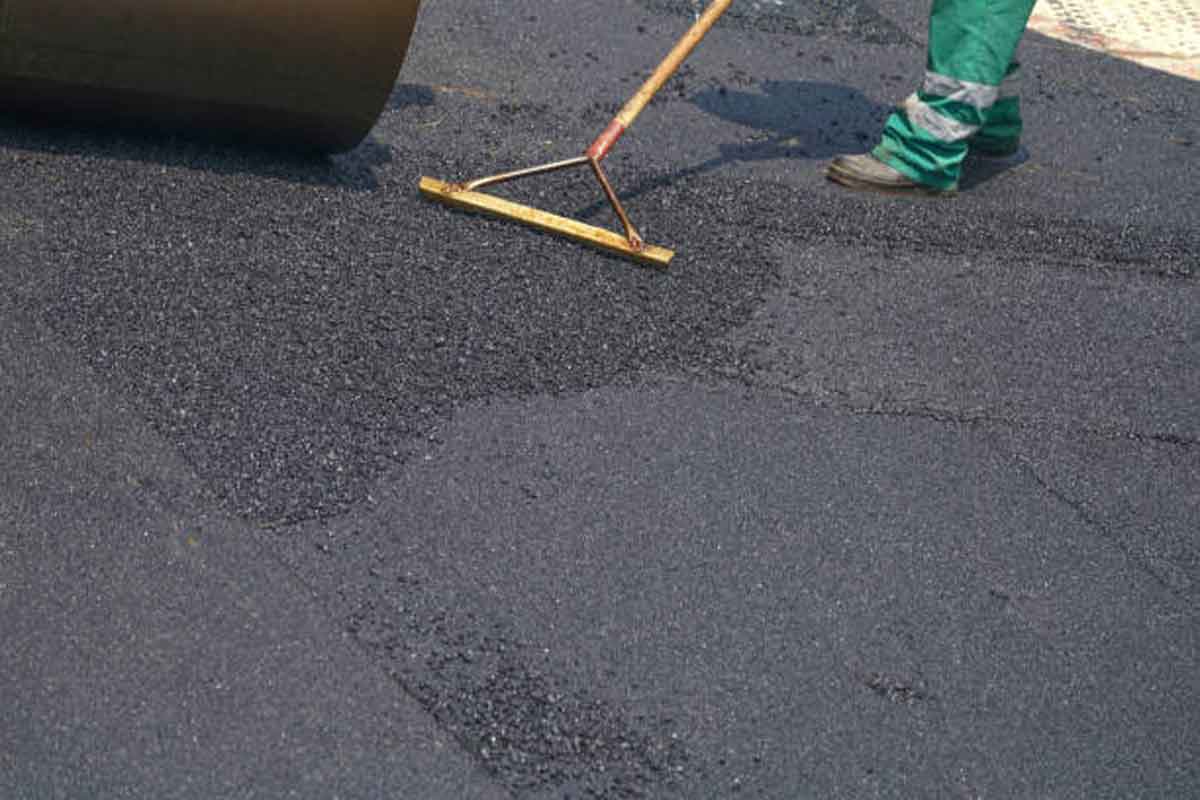
If you are wondering how to seal an asphalt driveway, the first step is working out what “sealing” means for your surface. An isolated crack, an ageing but stable driveway and a surface with potholes or base movement all need different treatments.
For a sound driveway, sealing usually involves cleaning the surface, completing suitable repairs, allowing it to dry and applying a compatible product according to its instructions. Professional spray sealing is different: it uses specialised equipment to apply bitumen and aggregate. Neither option will correct a failed base, sinking or serious drainage problems.
Quick answer
- Inspect the whole driveway, including cracks, potholes, edges, low spots and drainage.
- Clean the surface and treat compatible stains before applying any coating.
- Repair suitable cracks and localised damage first.
- Use a surface coating only when it is compatible with the existing pavement and follow its product instructions.
- Use a professional contractor for spray sealing, widespread damage or uncertainty about the base.
What Does “Sealing” an Asphalt Driveway Mean?
The word sealing is used for several different treatments. Choosing the wrong one can cover a symptom without addressing the cause.
| Treatment | What it does | When it may suit |
|---|---|---|
| Crack sealing | Places a flexible material into suitable cracks to help limit water entry. | Isolated cracks where the surrounding pavement and base remain stable. |
| Surface sealcoating | Applies a compatible coating over a sound asphalt surface. | Preventative maintenance where the product is suitable for the existing pavement. |
| Professional spray seal | Applies bitumen and aggregate using specialised equipment before rolling the surface. | Driveways and larger areas assessed as suitable for a spray-seal finish. |
| Asphalt resurfacing | Adds a new asphalt layer after preparation and any required repairs. | Widespread wear or surface cracking where the base is still sound. |
These treatments are not interchangeable. In particular, a retail surface coating is not the same as professional spray sealing.
Check the Driveway Before You Start
Surface condition
Fine wear on a stable surface is different from potholes, loose material, deep cracking or areas that move under traffic. Sealing over active damage can hide it without fixing the underlying problem.
Base and levels
Sinking, rutting and repeated cracking can indicate movement below the surface. A coating cannot rebuild a weak base or restore correct levels.
Drainage
Look for water pooling after rain, runoff entering from gardens and blocked edges or drains. Water problems should be addressed before surface treatment.
Product and weather
Confirm that the product is intended for the existing asphalt. Follow its preparation, application, weather and curing instructions rather than relying on generic figures.
How to Apply a Surface Sealcoat
The following is a general overview for a structurally sound driveway. The product instructions remain the final guide.
- 01. Inspect the surface. Mark cracks, potholes, loose edges, soft areas and places where water collects.
- 02. Clean thoroughly. Remove loose debris, dirt and vegetation. Treat oil or fuel contamination using a method compatible with the pavement and coating.
- 03. Complete suitable repairs. Fill appropriate cracks and repair localised damage using compatible materials. Larger failures need assessment before coating.
- 04. Allow the driveway to dry. Do not trap moisture beneath a coating. Check the forecast and the product’s required drying window.
- 05. Prepare the product exactly as directed. Do not dilute, mix or combine products unless the manufacturer permits it.
- 06. Apply an even layer. Work methodically so the coating is consistent and you retain a clear exit path.
- 07. Protect the curing area. Keep vehicles, foot traffic, pets and debris off the surface for the full period stated by the manufacturer.
How Professional Spray Sealing Works
Professional spray sealing is a different process from rolling or brushing on a surface coating. Active Asphalt assesses the pavement, base, levels, drainage, access and intended traffic before recommending whether spray seal is suitable.
Review the site and confirm the required preparation.
Prepare the base or existing surface and correct unsuitable weak areas.
Apply bitumen and distribute aggregate with specialised equipment.
Roll and finish the surface, then provide site-specific access guidance.
Because the process involves specialist materials, plant and site controls, spray sealing is contractor work rather than a homeowner coating project. Learn more about professional spray seal asphalt and bitumen driveway options.
When Sealing Is Not Enough
Use the condition of the surface and base, rather than appearance alone, to choose the next step.
Localised damage can often be cut out, patched or crack sealed before it spreads. See asphalt repair options.
A new asphalt layer may be more suitable when wear and cracking affect much of the surface. See asphalt resurfacing.
The failed material and underlying cause need to be addressed before a new surface is installed.
If you are unsure which condition applies, send clear photos of the whole driveway, close-ups of the damaged areas and any places where water pools.
Common Driveway-Sealing Mistakes
- Coating over potholes, loose material or moving cracks.
- Applying product to a damp, dusty or contaminated surface.
- Assuming a thicker application will perform better.
- Using a crack filler as a coating or a surface coating as a structural repair.
- Treating spray seal and retail sealcoating as the same process.
- Ignoring low spots, blocked drainage and unsupported edges.
- Reopening the driveway before the product manufacturer or contractor says it is ready.
Should You Seal the Driveway Yourself?
A homeowner may be able to apply a suitable retail coating to a small, sound and properly prepared surface. The work becomes less suitable for DIY when the surface type is unclear, the driveway is large, cracking is widespread or the pavement has potholes, movement, sinking or drainage problems.
Professional assessment is also appropriate when you are comparing crack repair, spray seal, resurfacing or reconstruction. Active Asphalt can assess the existing surface and recommend an approach based on the base condition, drainage, access and expected vehicle use.
Frequently Asked Questions
Can you seal over cracks in an asphalt driveway?
Suitable cracks should normally be cleaned and repaired before a surface coating is applied. Cracks caused by movement or base failure need the cause assessed because coating over them will not stop the pavement moving.
Can spray seal be applied to an existing asphalt driveway?
It may be possible where the existing pavement and site are suitable, but the decision depends on surface condition, base stability, drainage, levels, access and expected traffic. A contractor should assess the driveway before recommending spray seal.
Will sealing fix potholes?
No. A pothole is failed pavement, not simply an unsealed surface. The loose or failed material and any weakness beneath it should be repaired before another surface treatment is considered.
Is sealing the same as resurfacing?
No. A surface coating adds a maintenance layer, while resurfacing installs a new asphalt layer after preparation and required repairs. Resurfacing is generally considered when wear is widespread but the base remains suitable.
How often should an asphalt driveway be sealed?
There is no reliable interval that suits every driveway. Product type, surface condition, traffic, drainage, exposure and previous treatments all matter. Inspect the driveway periodically and follow the selected product’s instructions or site-specific contractor advice.
Get Advice for Your Driveway
Not sure whether your driveway needs crack sealing, spray seal, resurfacing or reconstruction? Active Asphalt works across Adelaide on residential, commercial and shared-access surfaces.
Include your suburb, approximate driveway size, surface type and photos of damaged areas or drainage concerns.