
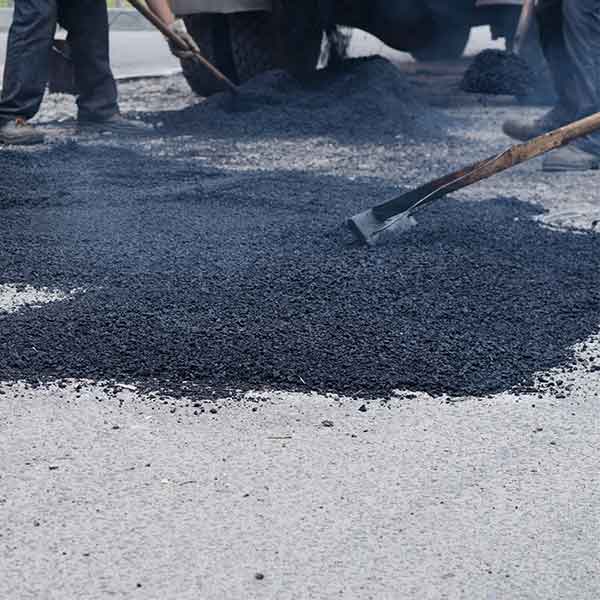
If you are asking whether you can asphalt your own driveway, the honest answer is that a complete hot-mix installation is usually not a practical DIY job. An asphalt driveway is a pavement system. The finished black surface only performs as well as the ground, base, levels, drainage, edges and compaction beneath it.
Homeowners can still do useful planning before work begins. Measuring the area, photographing the site, noting drainage and access constraints, and checking local crossover requirements can make the quoting process clearer. Small cold-mix repairs are a separate task and should not be confused with constructing a whole driveway.
Quick answer
- A complete hot-mix driveway normally requires professional machinery, material coordination and experienced installation.
- The base, levels and drainage are as important as the asphalt surface.
- Bagged cold mix can suit limited temporary repairs, but it is not a substitute for a complete driveway.
- Homeowners can help by measuring, documenting the site and clarifying access and intended vehicle use.
- An existing driveway may suit repair or resurfacing instead of full replacement, but the base must be assessed first.
What Is Involved in Asphalting a Driveway?
A professional driveway installation involves much more than spreading asphalt over the ground. The scope depends on the existing surface, soil and base condition, drainage, levels, access and expected traffic.
1. Assess the site
The existing surface, ground conditions, vehicle use, machinery access, drainage and connections to the garage, path or street all influence the required scope.
2. Prepare the foundation
Unsuitable or failed material may need to be removed. The base is then shaped and compacted so it can support the expected traffic without moving beneath the surface.
3. Set levels and drainage
Falls and tie-ins must move water away from the pavement and surrounding structures. Low spots can hold water and contribute to premature deterioration.
4. Lay and compact asphalt
Hot mix must be delivered, placed and compacted while it remains workable. The crew coordinates the material, plant and site access so the surface is even and properly compacted.
Edges, joins and transitions are then finished, the site is left safe and access guidance is provided for the completed work. Active Asphalt’s asphalt driveway service explains how the team assesses, prepares, installs and hands over residential driveway projects across Adelaide.
Why a Full Asphalt Driveway Is Difficult to DIY
| Challenge | Why it matters | What can go wrong |
|---|---|---|
| Base preparation | The foundation must support the intended vehicles and remain stable. | Movement, rutting, cracking or sinking can appear through the finished surface. |
| Levels and drainage | The driveway needs suitable falls and clean connections to surrounding surfaces. | Ponding, runoff problems or awkward steps can remain after installation. |
| Material timing | Hot mix loses workability as it cools, so delivery, laying and compaction must be coordinated. | Delays can leave an uneven or poorly compacted surface. |
| Plant and access | Excavation, shaping, paving and compaction require suitable machinery and room to operate. | Restricted access can change the method, labour and achievable finish. |
| Safety and site control | Hot materials, moving plant and connections to public access areas need controlled work practices. | People, vehicles, buildings and services can be put at risk if the site is not managed properly. |
Can You Use Bagged Cold Mix for a Whole Driveway?
Bagged cold-mix products and professionally laid hot-mix asphalt serve different purposes. Cold mix can be useful for a small, isolated pothole or edge repair on an otherwise stable surface. It is convenient because it can be placed without coordinating a hot-mix delivery.
That does not make it a practical material for constructing or resurfacing a complete residential driveway. A full driveway requires a consistent pavement structure, appropriate base preparation, controlled levels and suitable compaction across the whole area. If you are considering a small repair, see the guide to DIY cold-mix bitumen products and professional alternatives.
What Can a Homeowner Do Before Installation?
You do not need to operate paving machinery to play a useful role in the project. Clear information helps a contractor understand the site and prepare a more relevant scope.
Record approximate length and width, then take wide photos and close-ups of damaged or uneven areas.
Identify whether the area is soil, gravel, concrete, asphalt, bitumen or a combination of surfaces.
Photograph ponding, downpipes, drains and runoff paths, especially after rain.
Note gates, narrow sections, overhead restrictions, slopes and any need to keep part of the property accessible.
List the cars, utes, trailers or heavier vehicles that will regularly use the driveway.
If work affects a crossover, kerb or road reserve, confirm the relevant council’s current requirements before work starts.
Agree with the contractor before doing any clearing or excavation yourself. Removing the wrong material or changing levels can make later preparation more difficult rather than saving time.
Does the Driveway Need Repair, Resurfacing or Replacement?
The most economical option depends on the condition below the visible surface.
Localised damage may suit patching or crack repair when the surrounding surface and base remain stable.
A new asphalt layer may be suitable after preparation and any required repairs. Learn more about asphalt resurfacing.
The failed material and underlying cause need to be addressed before a new surface is installed.
Photos can support an initial conversation, but the final recommendation may require a site assessment so the surface, base, levels and access can be considered together.
How to Compare Asphalt Driveway Quotes
Comparing only the total price can hide important differences in the proposed work. Ask each contractor to explain what is included for:
- removal or treatment of the existing surface;
- base preparation and repair;
- drainage, falls and low spots;
- asphalt thickness for the expected vehicle use;
- edges, joins and tie-ins;
- machinery access and site protection;
- staging if access must be maintained; and
- handover and guidance on when the surface can be used.
A clear written scope makes it easier to compare like with like and understand what preparation sits beneath the finished surface.
Frequently Asked Questions
Can asphalt be laid by hand?
Small areas may involve some hand work, but a complete driveway still requires suitable preparation, material delivery and mechanical compaction. Hand placement alone does not remove the need for the correct base, levels, drainage and equipment.
Can I prepare the driveway base myself?
Discuss this with the paving contractor before starting. The required excavation, base material, levels and compaction depend on the site and expected traffic. Incorrect preparation can affect the entire finished driveway.
Is cold mix suitable for a complete driveway?
Cold mix is generally used for limited repairs rather than constructing or resurfacing a whole driveway. A complete driveway needs a consistent base, surface and compaction across the full area.
Can asphalt be laid over my existing driveway?
It depends on the existing material, base stability, levels, drainage and available height at garages, paths and the street. A sound surface may suit resurfacing, while movement or base failure may require removal and reconstruction.
Do I need council approval for a driveway?
Requirements vary by council and project. Work affecting a crossover, kerb, footpath or road reserve may have specific conditions, so check with the relevant council before work begins.
What should I send with a driveway quote request?
Include your suburb, approximate dimensions, clear photos, the current surface type, visible damage or ponding, machinery access constraints, expected vehicle use and any timing or access requirements.
Plan Your Asphalt Driveway
Not sure whether your property needs a new driveway, replacement, repair or resurfacing? Active Asphalt installs and repairs asphalt driveways across Adelaide and can recommend an approach based on the site, base, drainage, access and expected vehicle use.
Send your suburb, approximate dimensions and a few clear photos for an initial discussion.