
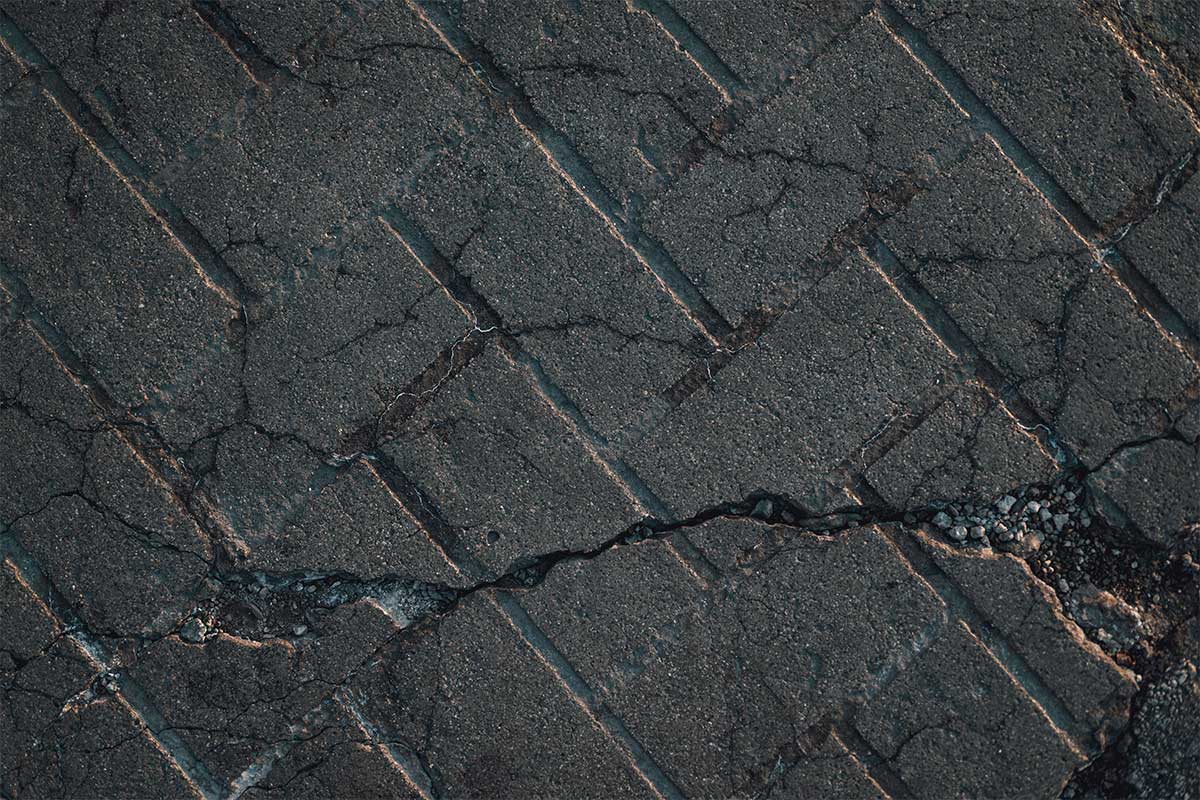
Match Fix to Fault
Cracks, potholes and sunken sections each need a different repair, and using the wrong one wastes money.
Early Wins
Sealing a small crack now prevents the pothole that costs many times more to patch next winter.
Identifying Common Driveway Issues
Learning how to repair asphalt driveway damage starts with reading the surface, because each fault points to its own fix. Cracks, potholes, crumbling edges, sunken wheel paths and a grey, weathered finish all tell you something different about what is happening underneath.
What the Surface Is Telling You
Walk the driveway after rain and these are the four signals to look for, in rising order of urgency.
The Warning Signs:
- Cracks: Fine lines are surface age, while wide or spreading cracks mean water is finding its way to the base.
- Potholes: A pothole is a failed patch of surface and base together, and it only ever grows.
- Edge Breakdown: Crumbling edges show unsupported asphalt, common where lawns or garden beds sit low beside the surface.
- Depressions: Sunken wheel paths or hollows that hold water point to settlement in the base underneath.
Water is the common enemy in every case. Adelaide winters push rain into any opening, the base softens, and each pass of a vehicle works the damage a little wider. That is why timing beats technique: the same repair done a season earlier is smaller, cheaper and lasts longer.
DIY Fixes vs. Professional Repairs
Store bought crack fillers and cold mix patches have a place as short term holding measures. Lasting repairs need hot mix, proper compaction and base correction, which is where professional equipment earns its keep.
Reasonable DIY Holding Measures
- Filling narrow cracks with a quality flexible filler before winter.
- Tamping cold mix into a small pothole to stop it growing.
- Keeping the surface swept and drains clear so water moves on.
- Photographing damage so a professional can quote quickly.
When to Call a Professional
- Cracks that are widespread, wide or returning after filling.
- Potholes that are deep, growing or reappearing after patching.
- Sunken sections, soft spots or anywhere that holds water.
- Any repair where the base underneath is suspect.
The honest line on how to repair asphalt driveway problems yourself is this: DIY buys time, it does not buy permanence. Cold mix lacks the heat and compaction that bond a real patch into the surface, so treat it as first aid while the proper repair is arranged.
The Professional Repair Process
A professional repair removes the failed area cleanly, corrects the base underneath, then rebuilds the surface with hot mix compacted to match the driveway around it.
For potholes and failed sections, that means saw cutting a neat perimeter, excavating the failure, reinstating and compacting the base, then laying and compacting hot asphalt so the patch knits into the surrounding surface. Cracks are cleaned and sealed with flexible sealant, and sunken areas are corrected rather than simply topped up, because a cosmetic fill over a base problem always comes back.
Our asphalt repair service covers all of it, from a single pothole to widespread patching, with every job backed by a 12-month workmanship warranty.
One more honest note: where damage covers most of the driveway, resurfacing can be the smarter spend than chasing repairs one by one, and a quick site inspection is the fastest way to know which side of that line you are on.
Frequently Asked Questions
Here is what Adelaide homeowners most want to know about how to repair asphalt driveway damage properly.
Can I just fill a pothole myself?
Cold mix from a hardware store will hold a small pothole together for a while, and it is better than leaving the hole open.
It lacks the heat, compaction and base correction of a proper patch, so expect it to be temporary rather than permanent.
Why do my repaired cracks keep coming back?
Returning cracks usually mean movement underneath, either in the base itself or from moisture changes and tree roots nearby.
A professional repair treats the cause, corrects the base where needed and seals with a flexible product built to handle movement.
Will a repaired patch match my driveway?
Fresh asphalt starts darker than the aged surface around it, so a new patch is visible at first and blends as it weathers.
Where a uniform look matters on an older driveway, resurfacing the whole area is the option that delivers it.
The short version of how to repair asphalt driveway damage: read the fault, act a season early, use DIY only as a holding measure, and let hot mix and compaction do the permanent work. Driveways rarely fail all at once, they fail one ignored crack at a time.
For a fast price on your own repairs, request a free quote with a few photos of the damage, and our team will recommend the right fix for each fault.